
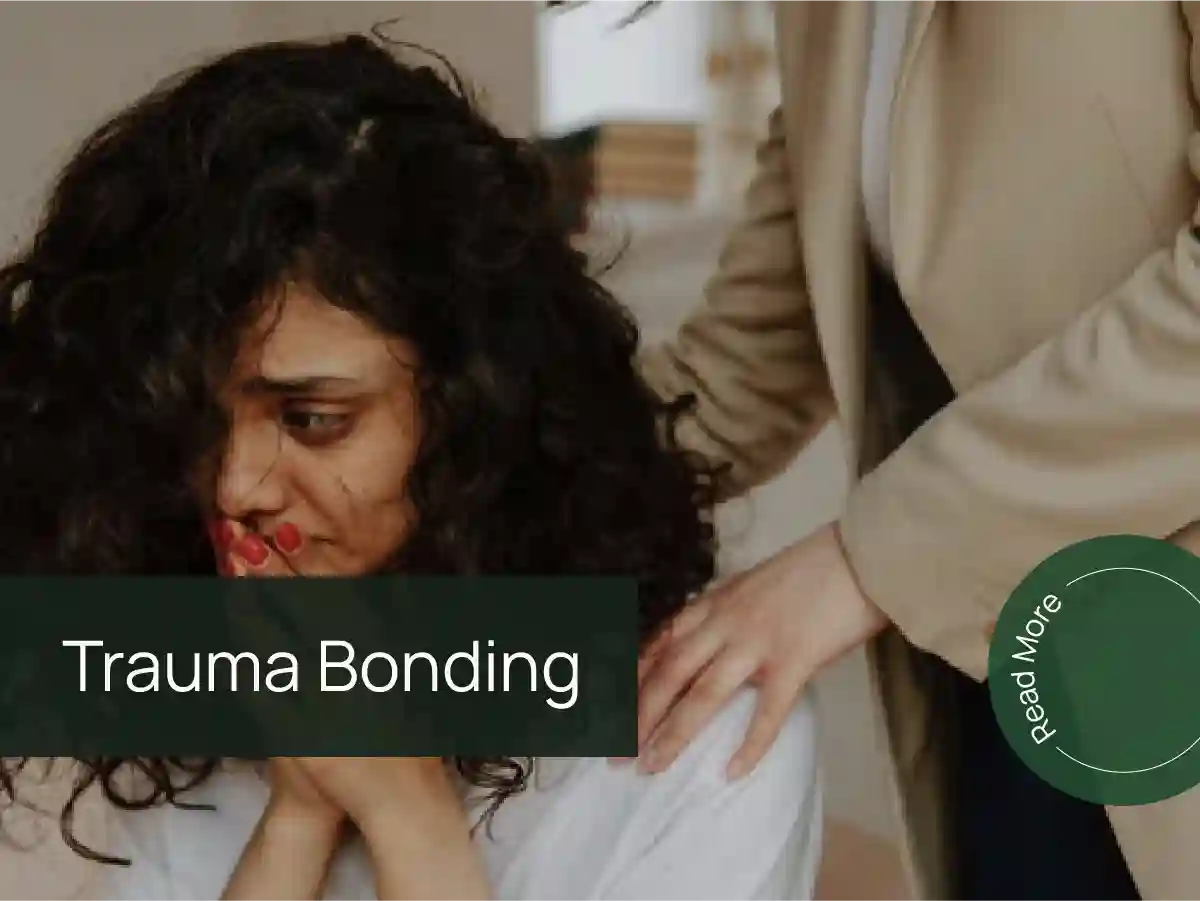
Trauma bonding is a powerful emotional attachment that forms with someone who alternates between hurting you and being kind to you. It’s driven by intermittent reinforcement, not love. If this sounds like your relationship, help is available: call or text the National Domestic Violence Hotline at 1-800-799-7233, or text START to 88788.
What Is Trauma Bonding?
Trauma bonding is a term coined by researcher Patrick Carnes to describe the bond that forms between someone and a person who hurts them, especially when that hurt is mixed with moments of affection. It’s common in relationships involving coercive control, narcissistic abuse, or domestic violence, but it can also show up in family or workplace dynamics.
The bond isn’t a sign of weakness or bad judgment. It’s a survival response, wired into how the brain reacts to danger mixed with relief. If you’ve ever wondered why you keep going back, or why leaving feels almost physically impossible, this pattern is very likely part of the answer. Understanding the mechanism behind it can be the first step toward loosening its grip, even before you’re ready to make any bigger decisions about the relationship itself.
Trauma Bonding vs. Stockholm Syndrome
People often ask about trauma bonding vs Stockholm syndrome. Stockholm syndrome technically describes hostages bonding with captors in acute, short-term situations. Trauma bonding is the broader term used for ongoing relationships, like domestic partnerships or families, where the same cycle of harm and relief plays out over months or years.
Why the Bond Feels Like Love
Trauma bonds form partly through love bombing early on, intense affection and attention that creates a strong sense of connection. When devaluation and hurt follow, the brain still remembers that intensity and chases it, mistaking the chaos for passion. This is a chemical and psychological response, not evidence that the relationship is actually loving or safe.
Signs of Trauma Bonding
There are usually 10 signs of trauma bonding that show up in some combination, though not everyone experiences all of them.
Signs You Might Notice in Yourself
- Making excuses for a partner’s hurtful behaviour, even to yourself
- Feeling intense relief and gratitude after conflict resolves
- Believing you’re the only one who understands or can help them
- Feeling anxious or panicked at the thought of leaving
Signs Others Notice First
- Friends or family expressing concern you don’t share
- Isolation from your usual support network
- Defending your partner strongly when others raise concerns
- Changes in mood or confidence that track closely with the relationship
Gaslighting often plays a role too, making it harder to trust your own read on what’s happening, which is part of why signs are often easier for outside people to spot first.
The Stages of a Trauma Bond
The 7 stages of trauma bonding generally follow this order:
- Love bombing, intense early affection
- Trust and dependency building
- Criticism creeping in
- Manipulation and gaslighting
- Resignation, where the harm starts to feel normal
- Loss of self
- Addiction to the cycle itself
Not every relationship moves through these in a straight line, but the tension-building phase followed by relief is the engine underneath all of it.
Why Trauma Bonds Form: The Science of Intermittent Reinforcement
Intermittent reinforcement is a psychological term for rewards that come unpredictably. It’s the same mechanism that makes slot machines addictive. When kindness and cruelty come from the same unpredictable source, the brain’s dopamine and oxytocin systems respond intensely to the good moments, while cortisol spikes during the bad ones. Over time, this creates an attachment that feels a lot like a hard emotional addiction, hoovering behaviour included, where an abusive partner pulls someone back in right when they’re close to leaving.
Is It a Trauma Bond, or a Hard Relationship?
All relationships have hard seasons. The difference is what’s underneath the hard part. A difficult but safe relationship still has room for honesty, disagreement, and repair without fear. A trauma bond usually involves a repeating cycle of harm, denial or blame, then reconciliation, along with a real fear of what happens if you speak up or leave. If you feel unsafe, controlled, or afraid of your partner’s reaction to normal disagreement, that’s worth taking seriously.
A useful question to ask yourself: after a hard conversation, does the relationship actually get a little better, or does it just reset until the next blow-up? Real repair leaves things stronger. A trauma bond just resets the cycle, over and over, without anything really changing underneath.
How to Begin Breaking a Trauma Bond Safely
Why Leaving Is the Most Dangerous Moment
Separation is statistically the most dangerous period in an abusive relationship. This isn’t a reason to stay, but it is a reason to plan carefully with people trained for this, rather than trying to navigate it alone. A trained advocate can help build a safety plan specific to your situation.
Building a Support Network
Reconnecting with people you may have grown distant from, even slowly, matters here. So does having somewhere to say the truth out loud without judgment, whether that’s a trusted friend, a support group, or a therapist trained in trauma-informed therapy. Isolation is often part of how the bond stays strong, so rebuilding even one honest connection outside the relationship can shift a lot. You don’t need to explain everything at once. Starting small, with one person or one call to a hotline advocate, is still real progress.
How Trauma-Informed Therapy Helps
Trauma-informed therapy gives you space to process what happened at your own pace, without pressure to have it all figured out. A therapist can help you understand the trauma bond itself, work through complex PTSD (C-PTSD) symptoms if they’re present, and slowly rebuild trust in your own judgment. Sessions often include building a personalized safety plan alongside the emotional work, so practical steps and healing happen together rather than one before the other. Individual therapy in Virginia Beach is often the right starting point here, giving you a steady, private space to work through this.
It’s worth being direct about one thing: couples therapy is not appropriate as a first response where abuse is present. It can put the person being harmed at further risk. If safety is a concern in your relationship, individual, trauma-informed support comes first.
Therapy Options at Sequoia
- Individual therapy: a private space to process trauma bonding at your own pace
- Couples therapy: appropriate once safety is established, not as a first step where abuse is present
- Family therapy: rebuild trust and communication across the household
Cost shouldn’t be the reason you don’t reach out. Our page on insurance and sliding scale rates breaks down what therapy actually costs in Virginia Beach.
Getting started is simple. Request an appointment and we’ll help you find the right fit from there.
Frequently Asked Questions
What are the 7 stages of a trauma bond?
They typically run: love bombing, trust building, criticism, manipulation, resignation, loss of self, and addiction to the cycle. Not every relationship follows this exact order, but the pattern of intense highs followed by painful lows is the common thread across all of them.
How do you break a trauma bond?
Breaking a trauma bond safely usually starts with naming what’s happening, building a support network, and working with a trauma-informed therapist or domestic violence advocate. If leaving is part of the picture, a safety plan matters more than speed.
How do you know if you are trauma bonded?
Common signs include making excuses for someone who hurts you, feeling intense relief when conflict passes, and fear at the idea of leaving. If people close to you are worried and you feel defensive about it, that’s worth exploring further.
Is a trauma bond the same as love?
It can feel exactly like love because of the intensity involved, but it isn’t the same. Love doesn’t require fear, control, or a repeating cycle of harm and relief. Trauma bonding is a survival response, not evidence of a healthy connection.
How long does it take to break a trauma bond?
There’s no fixed timeline. It depends on how long the bond has been forming, your support system, and whether you’re working with a trauma-informed therapist. Healing is rarely linear, and that’s completely normal.
Can a trauma bond be healed in couples therapy?
Only once safety is clearly established, and even then, individual therapy usually comes first. If abuse or coercive control is present, couples therapy is not recommended as a starting point, since it can increase risk for the person being harmed.
If you’re in immediate danger, call 911. For confidential support, contact the National Domestic Violence Hotline at 1-800-799-7233, text START to 88788, or call or text 988 for the Suicide and Crisis Lifeline.