They text good morning and goodnight. By week two, you’re their soulmate. It feels amazing. It can also be a red flag. Dating is confusing enough already. This guide covers love bombing examples, how the pattern works, and what to do if it sounds familiar.
What Is Love Bombing?
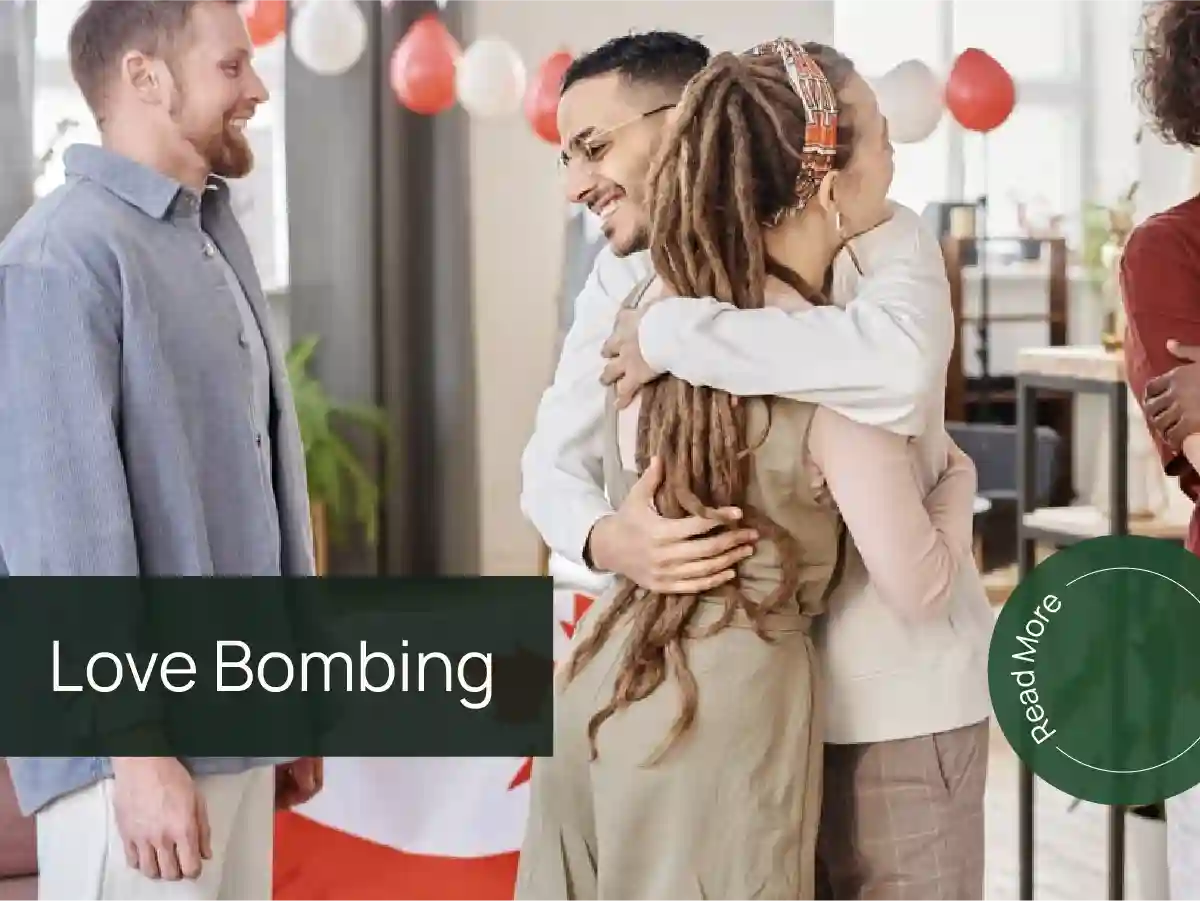
Love bombing is when someone floods you with attention, praise and affection to win you over fast. It feels like a fairy tale. But the goal is often control, not connection. Think of it as a house fire, not a slow burn.
Some people do it on purpose. Others don’t realise they’re doing it. Either way, the impact is real, and it can be the first step in the narcissistic abuse cycle.
Love Bombing vs Genuine Early Intensity
New love can feel intense. That doesn’t mean it’s love bombing. Here’s how to tell them apart.
| Comparison | Love bombing | Genuine excitement |
| Pace | Rushes everything | Builds over time |
| Your “no” | Tested or ignored | Respected |
| Focus | Their image and needs | Both people |
| Slowing down | Guilt, sulking or anger | Patience |
| Mood | Hot, then cold | Steady |
Remember this: intensity is not intimacy. Intimacy takes time.
Real Examples of Love Bombing
Love bombing examples usually look sweet at first. That’s what makes them tricky.
Phrases Love Bombers Use
- “I’ve never felt this way about anyone.”
- “You’re my soulmate.”
- “Nobody gets me like you do.”
- “We were meant to find each other.”
- “I can’t live without you.”
- “You’re not like anyone else I’ve dated.”
Watch for mirroring too. They copy your hobbies, fears and dreams so you feel a perfect match.
What It Looks Like Over Text
Love bombing signs online are easy to miss. Look for:
- Good morning and goodnight texts, every day
- Dozens of messages while you’re at work
- “I love you” within days
- Long, dramatic paragraphs by day three
- Sulking when you reply slowly
- Memes, songs and voice notes all day, then sudden silence
Gifts, Plans and Future Faking
Big gifts and surprise trips can be lovely. They’re a flag when they come with pressure. Future faking is another one. It’s big promises about a future they never build. “We’ll get a dog.” “I’ll meet your parents next month.” Then nothing happens.
The Cycle: Idealisation, Devaluation, Discard
Love bombing rarely stays. It tends to follow three stages:
- Idealisation. You’re perfect. Everything is amazing.
- Devaluation. The praise fades. Now you get criticism, silence and mind games. These include examples of gaslighting like “That never happened” or “You’re too sensitive.” Some add triangulation, bringing in an ex or a “friend” to make you jealous. Learn the gaslighting phrases to recognise.
- Discard. They leave, ghost or cut you off. Sometimes they return later and start again. Then the cycle repeats. Many people stay because they miss the first stage.
Is Love Bombing Always Narcissistic?
No. It’s often linked to narcissistic patterns, including the vulnerable narcissist type. But it isn’t a rule.
Some people love bomb from insecurity. Some fear being alone. Some are moving fast to lock love in, which can come from anxious attachment. A small number are what people search as “what is a sociopath” or “signs of a psychopath,” and they use charm as a tool. Still, only a licensed professional can diagnose anyone. Focus on behaviour, not labels.
Why It Works on Us
Love bombing isn’t a sign you’re dumb. It hits basic human needs. Your brain is doing its job. It just got played.
Intermittent Reinforcement
Random rewards are the hardest to quit. Think slot machine. When affection switches on and off, your brain keeps chasing the next hit. You start working harder for scraps of warmth. That’s how trauma bonding grows. Here’s how a trauma bond forms in more detail.
Attachment Style and Vulnerability
Your attachment style matters here.
- Anxious attachment: Fast love feels like relief.
- People pleasers: Per the people pleaser definition, you put others first to avoid conflict. So you ignore your gut.
- Avoidant attachment: You may enjoy the chase, then pull back when things get real. That’s what avoidant attachment looks like in dating.
Loneliness, a recent breakup and past trauma also make it easier to fall for. None of that is your fault.
Love Bombing in Long-Distance and Military Relationships
Distance speeds things up. Calls and texts replace time in person. Words feel huge when you can’t check them against actions.
In Virginia Beach, deployment can rush things even more. Engagements, moves and big promises happen fast because orders are coming. Fast isn’t always fake. But pressure is a red flag. Ask yourself: do their actions match their words over months, not days?
Try this:
- Video call often, not just text.
- Meet in person before big decisions.
- Tell a friend what’s happening and listen to their take.
Am I the One Love Bombing?
Be honest with yourself:
- Do I get upset when they need space?
- Am I moving much faster than they are?
- Do I panic when they don’t reply?
- Am I trying to win them so they won’t leave?
If you said yes, that doesn’t make you a bad person. Often there’s fear underneath. It’s the anger iceberg again: what looks like intensity may be hurt or fear. Slow down and get some support.
What to Do If You Recognise This
Slowing the Pace Without Accusing
Try: “I really like you. I want to go slower.” Then watch. A healthy person adjusts. A love bomber sulks, pushes or guilt trips.
Boundaries That Actually Hold
- Say it once, clearly.
- Don’t over-explain.
- Follow through.
- Keep your friends and your plans.
- Use grey rock if they push. Stay short, calm and boring.
When to Leave and How to Do It Safely
If it turns into coercive control, like tracking, isolating or threats, plan your exit. Tell someone you trust. Save messages. Once you leave, use no contact and block them.
If you’re in danger, call 911. If you’re in crisis, call or text 988, the Suicide and Crisis Lifeline. Panic attacks after a breakup like this are common. A doctor can talk through options, including panic attack medication, if it’s a fit for you. Grounding techniques can help in the moment.
How Therapy Helps
Therapy helps you spot the pattern early. You learn to trust your gut again. You also heal from a trauma bond and figure out why fast love pulls you in. You set the pace, and nobody rushes you.
Therapy Options at Sequoia
At Sequoia Psychotherapy in Virginia Beach, you can start with individual therapy or couples therapy. Curious what happens next? Book your first session now.
Frequently Asked Questions
How do you know if you are love bombing?
You rush things and get upset when your partner slows down. You may also feel panicky without constant contact. Ask yourself if the pace is for them or for your fear. Getting honest here is a good sign.
What does love bombing look like over text?
Nonstop messages, early “I love yous” and sulking when you reply late. It’s a lot, very fast. If it feels like too much, trust that feeling.
Is love bombing always narcissistic?
No. Insecurity, fear and anxious attachment can cause it too. What matters is the impact and whether the person respects your limits.
What phrases do love bombers use?
“You’re my soulmate.” “I’ve never felt this way.” “I can’t live without you.” Words alone aren’t proof. Watch what happens when you say no.
Is love bombing the same as trauma bonding?
Not exactly. Love bombing is the behaviour. A trauma bond is the tie that can form afterward. One can lead to the other.
Can a love bomber change?
Some can, with honesty and support. It takes real effort over time. Words alone won’t do it. Actions will.