What Is Disenfranchised Grief?
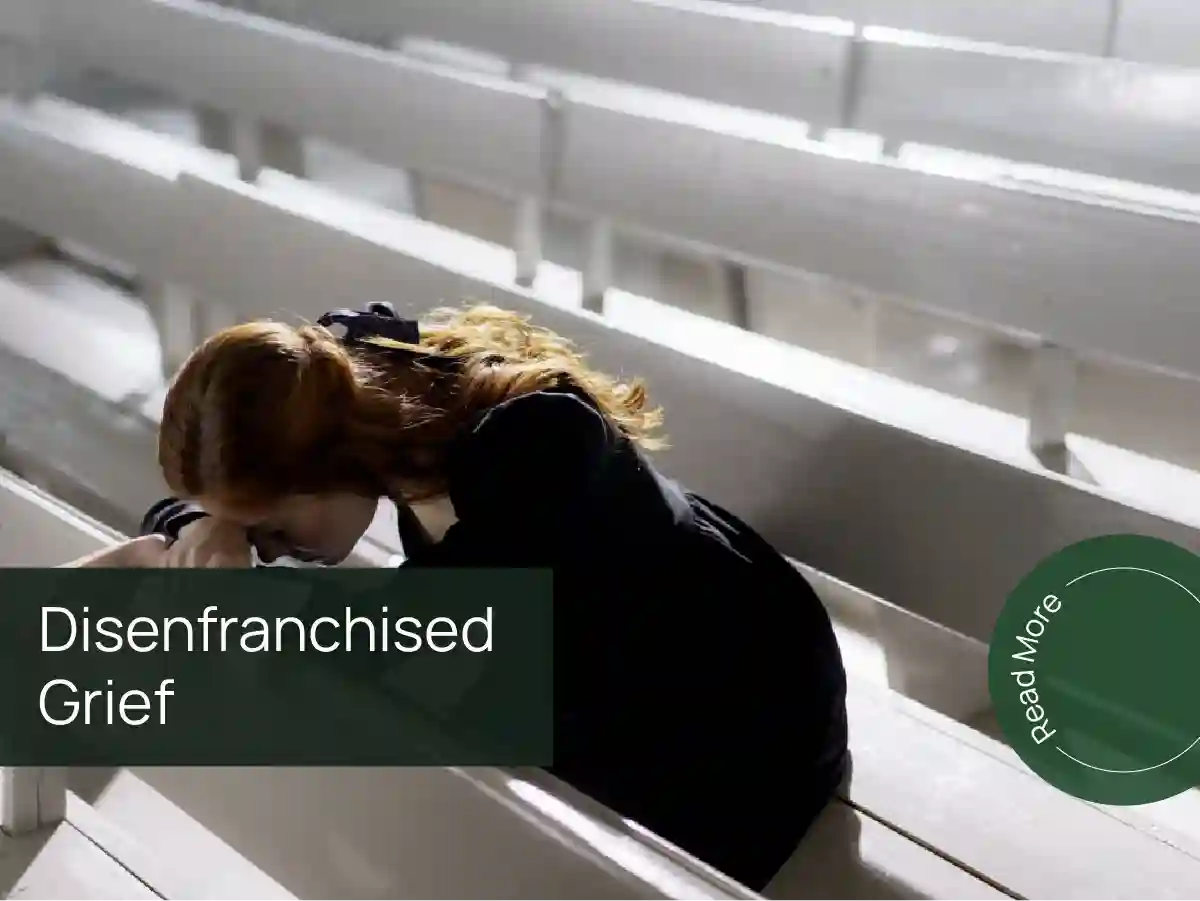
Disenfranchised grief is grief that goes unrecognized, unsupported, or even dismissed by the people and culture around you.
The word “disenfranchised” means to be stripped of a right or privilege. In this context, it means being denied the social permission to grieve. No one holds space for you. No rituals exist for your loss. People expect you to move on quickly, or they question whether what you are experiencing is really grief at all.
Sociologist Kenneth Doka introduced this concept in the 1980s. His core argument was simple: society has an unofficial rulebook about which losses count and which do not. When your loss falls outside those rules, you get left without the support you actually need.
The grief itself is completely real. The disenfranchisement is the additional layer of pain on top of it.
Examples of Disenfranchised Grief
Disenfranchised grief shows up in many types of loss. Some examples are widely shared but still overlooked. Others are losses that people barely talk about at all.
Disenfranchised Grief After Losses Others Overlook
- Pet loss. Losing a pet can be devastating. But workplaces do not offer bereavement days for it, and some people may say “it was just a dog.” For many people, a pet is a daily companion, a source of unconditional comfort, and a major presence in their life. That loss is real.
- Pregnancy loss and infertility. Miscarriage, stillbirth, failed IVF cycles, and the grief of not being able to conceive can all go unacknowledged. People may say “at least it was early” or “you can try again.” But these are real losses with real grief attached to them.
- The loss of someone with dementia. When a loved one has Alzheimer’s or another form of dementia, you can lose them gradually, long before they die. Grieving someone who is still alive is confusing and painful, and not many people know how to respond to it.
- Job loss or career endings. Losing a role that was central to your identity, or having a career end due to injury, illness, or circumstance, can carry significant grief. But our culture often treats it as a practical problem to solve rather than a loss to mourn.
Disenfranchised Grief in Relationships Others Don’t Recognize
- Grief after losing an ex-partner. If you lose someone you once loved romantically, people may not understand why you are grieving. “You were broken up” or “you’re better off” does not erase the history you shared or the future you once imagined together.
- Estrangement grief. Choosing to cut off a family member for your own safety or wellbeing, or being cut off by one, creates a unique kind of grief. You are mourning someone who is still alive. That ambiguity makes it hard for others to know what to say.
- Grief after losing a friendship. The end of a close friendship, especially a sudden or painful one, rarely gets acknowledged the way romantic endings do. But these losses can be just as significant.
- Grief for a found family member. If you grieve someone who was not your biological or legal family, you may be left out of official mourning entirely, even if that person was one of the most important people in your life.
Why Disenfranchised Grief Can Feel Heavier
Grief is already hard enough on its own. But disenfranchised grief carries significant extra weight because of what gets layered on top.
You may feel:
- Invisible. When no one acknowledges your loss, it can feel like the relationship or the person you lost never mattered.
- Ashamed or confused about your own grief. You start to question yourself. “Should I even be this upset?” The doubt adds pain to pain.
- Isolated. Grief is typically processed in community. When your community does not recognize your loss, you carry it largely alone.
- Angry. There is often a lot of anger in disenfranchised grief, and that anger is appropriate. You are not just grieving the loss itself. You are grieving the lack of support you deserved and did not get.
Research shows that lacking social support after a loss is one of the strongest predictors of prolonged or complicated grief. The absence of acknowledgment is not a small thing. It directly affects how hard grief hits and how long it lingers.
How to Cope With Disenfranchised Grief
Just because others do not recognize your grief does not mean it should go unnamed. Here are some things that can help.
Name it out loud. Saying “I am grieving” about a loss that others might minimize is a powerful act. It affirms that what you experienced was real and that your response to it is valid.
Find your own rituals. Funerals and memorial services exist because rituals help us process loss. When there is no ritual for your specific grief, you can create one. Write a letter to what you lost. Light a candle. Create a small ceremony that honors what the relationship or the loss meant to you.
Seek out people who get it. There are communities for almost every type of disenfranchised loss now, whether in person or online. Pet loss groups, pregnancy loss support communities, estrangement forums, and grief support spaces can offer the recognition that the people closest to you could not provide.
Give yourself full permission to grieve. You do not need anyone else to validate your loss for it to be real. The grief exists because something that mattered to you is gone. That is enough.
Be patient with yourself. Without social support, grief can move more slowly or feel more chaotic. That is not a sign that something is wrong with you. It is a predictable outcome of grieving without a net.
When to Get Support for Disenfranchised Grief
If your grief is interfering with sleep, work, relationships, or daily functioning, or if you feel stuck and cannot see a way forward, that is a signal to reach out for professional support.
Grief therapy offers something that disenfranchised grief often cannot find elsewhere: a space where your loss is treated as exactly as significant as it is. A therapist does not weigh your grief against an unofficial list of losses that are allowed. They meet you where you are.
If you are also carrying grief you anticipated, you might find our post on anticipatory grief helpful as a companion read.
At Sequoia Psychotherapy in Virginia Beach, we work with people who are carrying losses that the world around them does not fully see. You deserve space to grieve, regardless of what kind of loss you have experienced.
Learn more about our Grief and Loss Therapy in Virginia Beach.
If you are in crisis right now, please call or text 988. The Suicide and Crisis Lifeline is available 24 hours a day, 7 days a week.
Disenfranchised Grief FAQ
What are examples of disenfranchised grief?
Disenfranchised grief includes any loss that goes unrecognized or unsupported by those around you. Common examples include the death of a pet, pregnancy loss or infertility, losing an ex-partner, grief after estrangement from a family member, the end of a close friendship, job loss tied to identity, and the anticipatory grief of losing someone to dementia before they have died. These losses are real. The disenfranchisement is the additional pain of experiencing them without adequate support or acknowledgment.
What is the relationship between grief and anger?
Anger is a completely natural part of grief. When a loss goes unrecognized, the anger can be especially intense because it has two sources: the loss itself, and the experience of being unseen or dismissed in your pain. You may feel angry at the people who minimized your grief, angry at the unfairness of what happened, or even angry at yourself for still hurting. That anger is not a sign that something has gone wrong in your grief. It is a signal that something real was lost and that your pain deserved more care than it received.