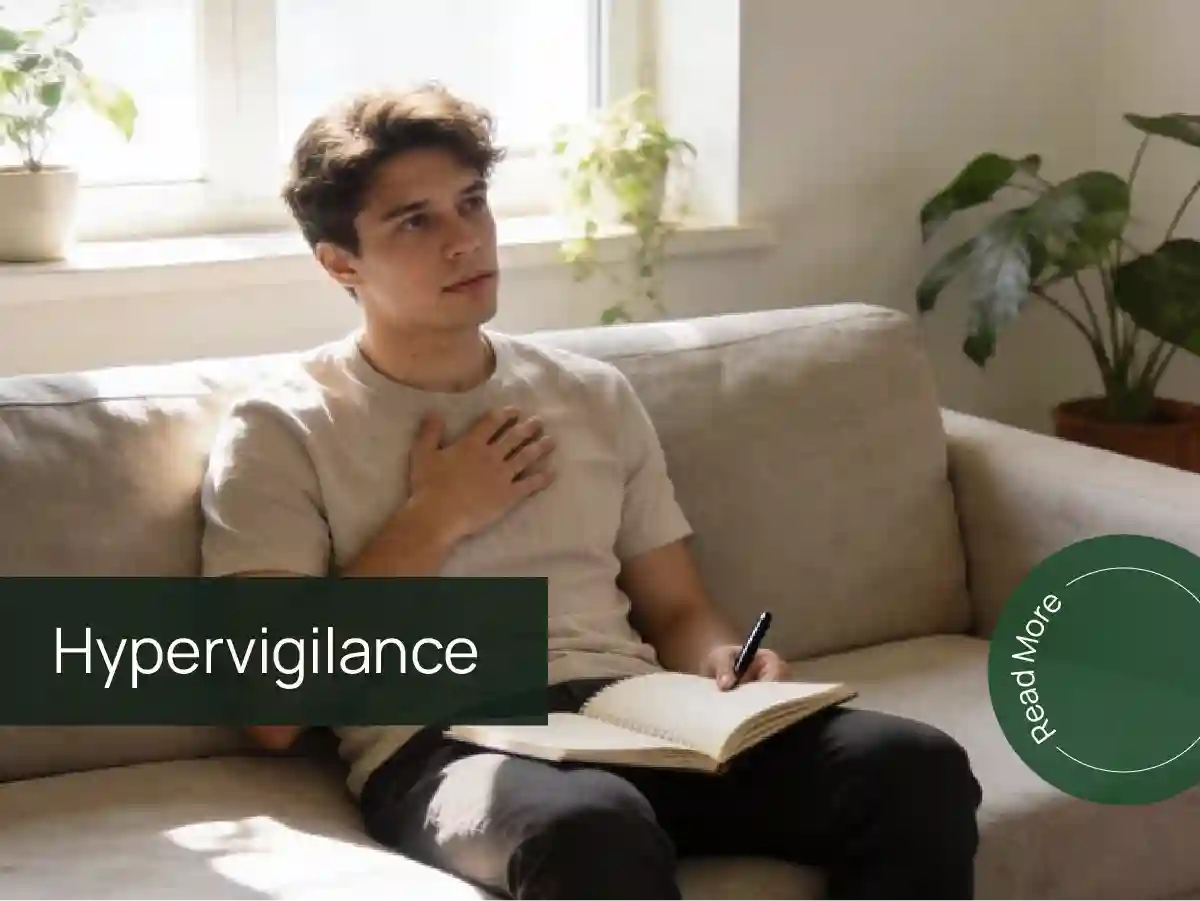
What Is Hypervigilance?
Hypervigilance is a state of being constantly on high alert. Your brain stays locked in danger mode even when there is nothing actually threatening around you.
Think of it like a smoke alarm that never shuts off. Even when there is no fire, it keeps beeping. That is what hypervigilance does to your nervous system. It keeps scanning for threats that are not there.
Hypervigilance is not a diagnosis on its own. It is a symptom. It tends to show up alongside PTSD, anxiety disorders, and trauma responses. It is your brain trying to protect you, but it gets stuck. The alarm stays on because your system cannot register that the danger has passed.
What Does Hypervigilance Feel Like?
One of the tricky things about hypervigilance is that it can feel completely normal if you have lived with it long enough. You might not realize it is there until someone points out that not everyone experiences the world this way.
Here are the most common things people describe:
- Constant scanning. You notice exits, track movement in a room, and pick up on every sound or shift in energy automatically.
- Being easily startled. Unexpected noises, sudden movements, or someone coming up behind you cause a sharp physical reaction.
- Feeling on edge most of the time. There is a low-level tension that lives in your body throughout the day.
- Trouble sleeping. Your brain thinks it needs to stay alert. Fully letting go feels unsafe.
- Reading neutral things as threats. A quiet coworker seems angry. A short text from a friend feels like rejection. A stranger on the street feels dangerous.
- Exhaustion without a clear cause. Staying this alert uses a lot of energy, even when you are just sitting still.
The hardest part is that the threat your nervous system is responding to is not happening right now. But your body does not know that yet.
Is Hypervigilance a Trauma Response?
Yes. In most cases, hypervigilance is a trauma response.
When you go through something overwhelming or dangerous, your nervous system learns to watch for signs it might happen again. That adaptation is incredibly smart in the moment. But sometimes the nervous system gets stuck in that protective mode, long after the original threat is gone.
This is especially common after:
- Childhood abuse or neglect
- Domestic violence or an abusive relationship
- Sexual assault
- Combat or military trauma
- Accidents or medical emergencies
- Growing up in a chaotic, unsafe, or unpredictable home environment
In each of these situations, staying alert was a survival strategy. Your brain learned that relaxing could mean missing something important. Now it keeps running that same program, even in places and situations that are objectively safer.
Hypervigilance, PTSD and Anxiety
Hypervigilance is one of the core symptoms of PTSD. The American Psychological Association includes it in the alterations in arousal and reactivity cluster of PTSD criteria.
It also shows up strongly in anxiety disorders. When you have anxiety, your brain consistently overestimates danger and underestimates your ability to cope. That keeps the threat-detection system running much hotter than it needs to be.
Hypervigilance with anxiety can look like:
- A constant background sense that something bad is about to happen
- Replaying conversations or situations afterward looking for signs something went wrong
- Feeling dread without being able to name why
- Being unable to enjoy peaceful or calm moments because you are waiting for the next problem
You do not need a formal diagnosis of PTSD to experience hypervigilance. Anyone who has lived through extended stress, emotional danger, or unpredictability can develop this kind of nervous system response.
Signs of Hypervigilance in Daily Life and Relationships
Hypervigilance does not just live in your head. It shapes how you move through the world every day.
At home:
- You struggle to relax even in your own space
- You check the locks more than once before bed
- Sudden noises at night jolt you awake
At work:
- You over-prepare for meetings because surprises feel threatening
- Silence from a manager reads as anger or disapproval
- Any critical feedback lands as a personal attack, even when it is not intended that way
In relationships:
- You are always braced for conflict, even when things seem completely fine
- Small shifts in tone from a partner or friend put you on high alert
- Being vulnerable feels genuinely dangerous
- People you care about may tell you that you seem distant or hard to reach
Over time, this wears on even the strongest relationships. The people around you may not understand why you cannot just relax. That gap can leave you feeling misunderstood and very alone.
How to Calm Hypervigilance
There is no instant fix. Hypervigilance builds over time and it unwinds the same way. But there are things that consistently help.
Start with your body, not your thoughts.
Your nervous system needs to feel physically safe before your brain can think clearly. Helpful tools include:
- Slow, extended exhales. A long exhale signals to your nervous system that the threat is over. Try breathing in for 4 counts and out for 6 or 7.
- Grounding in the present moment. Techniques that connect you to your physical surroundings can interrupt the alarm response. Our grounding techniques guide walks you through several step-by-step options.
- Cold water. Splashing cold water on your face activates the dive reflex, which slows heart rate and can interrupt a stress response fast.
Name what is happening.
When you notice yourself going into a heightened state, try saying internally: “My nervous system is activated. I am not in danger right now.” Naming it creates just enough distance to reduce its grip.
Work on the root cause.
Short-term tools help. But if hypervigilance is rooted in trauma, lasting change usually comes from working with a therapist trained in trauma. Trauma-focused therapy helps your nervous system actually update its threat assessment, not just manage the symptoms in the moment.
When to Get Help for Hypervigilance
If hypervigilance is getting in the way of sleep, your relationships, or your ability to function day to day, it is worth talking to someone.
Therapy approaches like EMDR, somatic therapy, and trauma-focused CBT have solid research behind them for treating hypervigilance, especially when trauma is at the root.
At Sequoia Psychotherapy in Virginia Beach, we work with people whose nervous systems will not let them rest. Whether you are dealing with hypervigilance tied to a specific event or a long pattern of stress and unpredictability, you do not have to stay stuck in survival mode.
Learn more about our Trauma and PTSD therapy in Virginia Beach.
If you are in crisis right now, please call or text 988. The Suicide and Crisis Lifeline is available 24 hours a day, 7 days a week.
Hypervigilance FAQ
What does hypervigilance feel like?
It feels like you are always waiting for something to go wrong. You might notice tension in your body, startle easily, and struggle to truly relax. You may find yourself scanning environments for threats or reading neutral situations as dangerous, even when things are objectively fine. The exhaustion from staying this alert can be significant, even on low-activity days.
Is hypervigilance a trauma response?
In most cases, yes. Hypervigilance is one of the most common nervous system responses to trauma. When your system has experienced real danger, it learns to stay on guard so you are not caught off guard again. The challenge is that it often stays in that alert mode long after the original danger is gone. This shows up especially often in people with PTSD, but it can also develop in anyone who has lived through chronic stress, emotional abuse, or an unpredictable environment for an extended period of time.