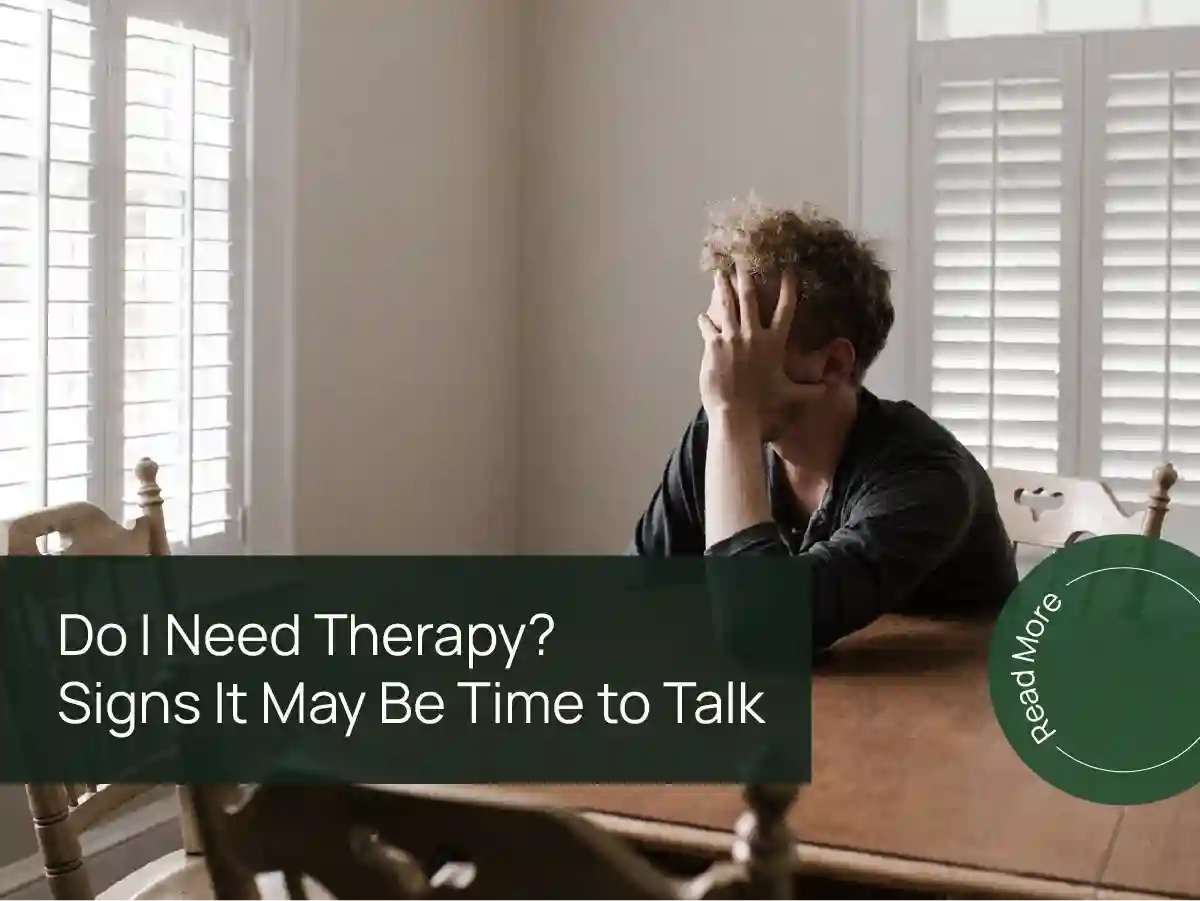
Short answer: you do not need to be in crisis, and you do not need a diagnosis, to benefit from therapy. If something feels off and you keep thinking about it, that is reason enough to talk to someone.
A lot of people spend months, sometimes years, quietly wondering if what they’re dealing with “counts.” It’s a common thought, and it usually says more about how we’re taught to handle struggle than about whether therapy would actually help. This guide walks through the signs people often notice, when to reach out sooner rather than later, and what actually happens once you do.
Common Signs It May Be Time to Talk to Someone
There is no official checklist for this, but there are things people often notice in themselves before they decide to reach out. If any of these sound familiar, it might be worth a conversation:
- Persistent low mood that sticks around for weeks, not just a rough day here and there.
- Sleep or appetite changes, like sleeping way more or less than usual, or eating differently than you normally would.
- Withdrawing from people, even ones you actually care about, because socializing feels like too much effort.
- Struggling with a life transition, like a breakup, a move, a new job, or becoming a parent.
- Recurring conflict in a relationship that keeps circling back to the same unresolved issue.
- Feeling irritable or on edge more often than not, even over small things.
- Trouble focusing or making decisions that used to feel simple.
- A sense of being stuck, like you’re going through the motions without really feeling present.
Notice that none of these signs are dramatic. That’s kind of the point. Most people who end up in therapy are not dealing with something extreme, they’re dealing with something persistent. A low mood that won’t lift, a pattern that keeps repeating, a version of yourself that feels harder to access lately. Those things matter too, even if they seem small when you try to explain them out loud.
These are things people commonly notice, not a diagnosis. Only a licensed clinician can actually assess what is going on for you, and that is exactly what an intake session is for.
You Don’t Have to Be in Crisis to Start
A lot of people put off therapy because they think their problem is not “bad enough.” Here’s the thing: therapy is not reserved for emergencies. You don’t need a diagnosis, a breakdown, or a specific traumatic event to justify booking a session.
Some people come in because they feel generally unsatisfied and can’t pinpoint why. Some come in because they want a space to think out loud without judgment. Some come in because a friend or partner suggested it. All of these are valid reasons.
If you are asking yourself “is this even worth bringing up,” that question alone is worth bringing up. Therapists hear this concern constantly, and it never surprises them. Waiting for things to get worse before reaching out is not a requirement, and it often just means carrying something longer than you need to.
Think of it this way: you don’t wait for a small ache to turn into something serious before seeing a doctor. The same logic applies here. Starting earlier usually means an easier, shorter process, not a harder one.
When to Reach Out Sooner
While you never need to be in crisis to start therapy, some situations do call for quicker support. Consider reaching out sooner if you are experiencing:
- Thoughts of harming yourself or someone else.
- A sudden, significant change in mood or behavior that worries you or people close to you.
- Substance use that feels like it’s becoming harder to control.
- A traumatic event that happened recently.
If you are in crisis right now, please call or text 988, the Suicide & Crisis Lifeline. It is free, confidential, and available 24/7. You do not have to wait for an appointment to get support in a moment like this.
The goal here isn’t to scare you into urgency, it’s just to be clear that some situations deserve faster support, and that reaching out immediately is always the right call when things feel that heavy.
What Happens When You Reach Out
Reaching out is a lot less complicated than most people expect. Here is roughly what it looks like:
- You send a message or fill out a short form describing what brought you in.
- Someone from the practice follows up to answer questions and help match you with a therapist.
- You schedule an intake session, which is really just a first conversation to get to know each other.
- From there, you and your therapist decide together what ongoing sessions look like.
A first conversation is not a commitment. It’s normal to talk to a therapist once and decide it’s not quite the right fit, and that’s okay. Finding the right match matters more than sticking with the first person you talk to.
Fit matters more than most people expect. The right therapist should feel easy to talk to, not like someone you have to perform for. If the first match doesn’t feel right, saying so is completely normal, and it usually just means trying a different therapist, not giving up on the process altogether.
Therapy Options at Sequoia
Sequoia Psychotherapy offers a few different paths depending on what you’re looking for:
- Individual therapy: one-on-one sessions focused on you, your thoughts, and what you’re working through.
- Couples therapy: sessions for partners working on communication, conflict, or reconnecting.
- Family therapy: sessions that bring family members together to work through shared challenges.
At Sequoia Psychotherapy, sessions are available both in person at our Virginia Beach office and virtually, so you can choose whatever fits your schedule and comfort level best. Whichever format you choose, the process starts the same way, with a conversation about what’s actually going on for you.
Getting started is simple. Request an appointment and we’ll help you find the right fit from there.
Frequently Asked Questions
How do I know if I need therapy?
If you’ve been struggling for a while, feel stuck, or keep thinking about reaching out, that’s usually a sign it’s worth exploring. You don’t need a specific reason to start.
Is my problem “big enough” for therapy?
Yes. Therapy isn’t reserved for major crises. Feeling overwhelmed, stressed, or simply wanting support with everyday life is enough reason to start.
Do I need a diagnosis to start therapy?
No. Many people start therapy without any diagnosis at all, simply because they want support, clarity, or a space to talk things through.
How long does therapy usually take?
It depends entirely on your goals. Some people attend a handful of sessions to work through something specific, while others continue longer term. There’s no fixed timeline.
Can I do therapy online?
Yes, Sequoia Psychotherapy offers virtual sessions in addition to in-person appointments, so you can pick whatever works best for you.
If you are in crisis, please call or text 988, the Suicide & Crisis Lifeline, for immediate support.